
A Day in the Life of a Trade Compliance Manager: A Corporate Parable
A fly on the wall at an executive retreat for Acme Super Duper Widget Company overhears the following conversation between Pete, the CFO, and Saira, the General Counsel.

A fly on the wall at an executive retreat for Acme Super Duper Widget Company overhears the following conversation between Pete, the CFO, and Saira, the General Counsel.

The CTPAT portal has been a work in progress for a number of years with the latest portal update (3.0) launched at the end of 2023. Let’s take a few minutes to explore a few strategies for best outcomes while avoiding common challenges and the SCSS response request for “more information”.

Those who cannot remember the past are condemned to repeat it.” – George Santayana. As an example of this I present to you the Smoot-Hawley Tariff Act of 1930. If you are not familiar with this, it is worth taking a moment to research.

Recently, President Biden signed a foreign military support bill (H.R. 815) into law, which also encompassed the 21st Century Peace Through Strength Act (the Act), a legislative proposal introduced in the House containing various U.S. sanctions-related measures. These sanctions measures extended the statute of limitations (“SOL”) from five to ten years for civil and criminal violations of sanctions programs administered by the U.S. Treasury Department’s Office of Foreign Assets Control (“OFAC”).

The new world order apparently has some merit as more than 30 nations have reportedly submitted applications to join the BRICS alliance wanting to reduce reliance on the US dollar. This wave of applications is a testament to the trust in the BRICS alliance as a viable option to a traditional economic structure. The BRICS alliance has broad shoulders and is representative of considerable economic growth.

On May 14, 2024, the United States Trade Representative (USTR) released its Final Report relating to the four-year review of actions taken in the Section 301 investigation. Within the Report, the USTR confirmed that it intends to take actions to raise tariffs on specific products as a result of the comprehensive review.

Canada has long enjoyed International Traffic in Arms Regulations (ITAR) license exemptions and minimal controls for items subject to the Export Administration Regulations (EAR). What about some of our other friends, such as Australia and United Kingdom? There are ITAR license exemptions for these countries in Parts 126.16 and 126.17 of the ITAR.

The United States Trade Representative (USTR) recently released a list of Section 301 exclusions that would be extended through May 31, 2025. Within the Notice, the USTR explained that extending these exclusions will support efforts to shift sourcing out of China, or provide additional time where, despite efforts to source products from alternative sources, availability of the product outside of China remains limited.

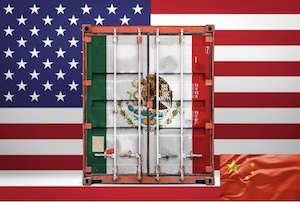
China’s foreign direct investment (FDI) in Mexico has seen substantial growth in recent years, reflecting a strategic alignment with global economic shifts and regional trade dynamics. This trend positions China as one of the fastest-growing sources of foreign investment in Mexico, with the majority of investments flowing into the manufacturing sector.

Digital assets, including blockchain and cryptocurrency protocols and companies, have been in a defensive posture for much of 2022, 2023 and 2024. The collapse of crypto exchange FTX and numerous enforcement actions taken by the Securities Exchange Commission (SEC) and Commodities Futures Trading Commission (CFTC) have forced the sector to retrench and upgrade their abilities to meet the higher standards of securities laws.

Tensions are escalating in the South China Sea, a vital maritime route for international trade. Taiwan remains at the center of this conflict and in an increasingly interconnected world, the prospect of a Taiwan invasion has far-reaching implications for global trade and geopolitics. It’s becoming even more crucial to understand the potential repercussions of such an event on the global economy as a potential invasion from China becomes increasingly more likely.

Maximizing value is crucial when companies contemplate bringing on external support for any organizational function. While a company may consider several value categories, this article explores five primary categories – productivity, profitability, image, experience, and convenience. By maintaining a value proposition mindset when requesting consultant resources, selecting consultants, and working with consultants, trade compliance professionals leverage the benefits of external experts.

Employee education supports organizational growth and development. Its benefits are generally well known, but how do you ensure that training, in any form, generates the outcomes and advances you desire? Measuring and benchmarking success can be especially difficult when creating customized training programs, which are often needed for international trade compliance topics.

Uniformity, or rather the lack thereof, in procedures and practices within U.S. Customs and Border Protection’s (CBP) Centers of Excellence and Expertise (Centers) is evidently harming compliant companies within the trade community.

A little over a year ago on June 1, 2022, the United States and Taiwan launched the United States-Taiwan Initiative on 21st-Century Trade to deepen their economic ties and trade relationship, and advance mutual trade priorities based on shared values, promoting innovation, and economic growth for workers and businesses.

This article examines Target Corporation v. United States, Slip Op. 23-106 (Ct Int’l Trade July 20, 2023), a recent ruling by the Court of International Trade (CIT) and its implications on liquidation matters.

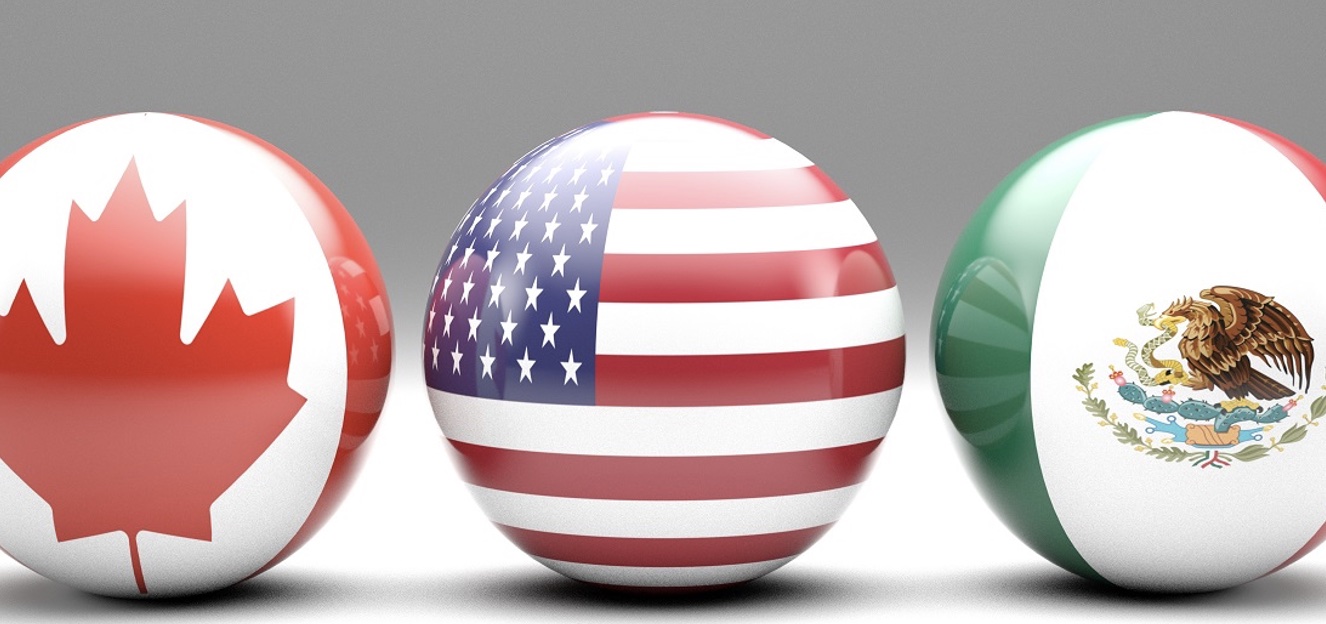
The United States Mexico Agreement (USMCA – the free trade agreement signed between Mexico, the United States and Canada) promotes and protects the trading of tequila between these 3 countries as it acknowledges it is a distinctive product of Mexico.

U.S. Customs & Border Protection (CBP) published the Final Rule on continuing education for individual customs broker license holders in the Federal Register on June 23, 2023. This Final Rule made several changes to Part 111 of the Customs Regulations and imposed a continuing education requirement on individual license holders.

The realm of international trade and commerce operates under a complicated system of export control regimes that are designed to protect national security, curb the proliferation of sensitive technologies, and ensure strict adherence to economic and trade sanctions.

This article discusses compliance “Buy America” provisions in federal procurement laws and how the Federal Acquisition Regulations (FAR) implement some of those commitments in government contracts.