
News Articles

Customs broker license exam

The U.S. Customs Broker License Exam: Tips and Perspectives

A customs broker license is issued to a person who has successfully passed a grueling licensing exam (after paying the exam fee), submitted a license application (along with another fee), and passed the subsequent FBI background investigation. The open-book exam, which lasts 4½ hours and comprises 80 multiple-choice questions, is ostensibly intended to measure one’s knowledge about various customs-related regulations and practices yet experience or employment in a customs-related job is not a prerequisite.

Read More »
Harmonized Tax Schedule

Punctuation in the Harmonized Tariff Schedule of the United States

Punctuation matters. I’ve always remembered a poster on the wall of a co-worker’s office—this was back in the 80s—that showed baby seals dancing at a disco under a four-word caption: STOP CLUBBING, BABY SEALS. The poster (which has become an internet meme forty years later) cleverly showed how something as seemingly minor as a comma can change the meaning of a phrase or sentence. If a comma can flip the meaning of a four-word sentence, is it hard to imagine the effect that punctuation, or lack of punctuation, might have on our interpretation of a law or regulation?

Read More »
tariffs

Beyond the Tariff: Proactive Strategies to Mitigate Trade Remedy Impacts

In today’s complex global marketplace, businesses are increasingly confronted with the challenges of supply chain disruptions, rising costs, and fierce competition—all exacerbated by trade remedy tariffs. While many of these tariffs are already in play, President-elect Trump has promised to impose new tariffs and increase old ones.

Read More »
Mercosur

Mercosur-EU – A New Potential Powerhouse in Trade Blocs if Ratified

After 25 years of negotiations, the European Union and the Southern Common Market, commonly known as Mercosur, comprised of Brazil, Argentina, Uruguay, and Paraguay, signed a free trade agreement. I think this, among many more regional deals to come was suddenly expedited due to the anticipated land mines with the upcoming Trump 2.0 administration and trade policy regarding tariffs for all.

Read More »
tariffs

Tariffs, and the Temptation to Use Them as Geopolitical Leverage

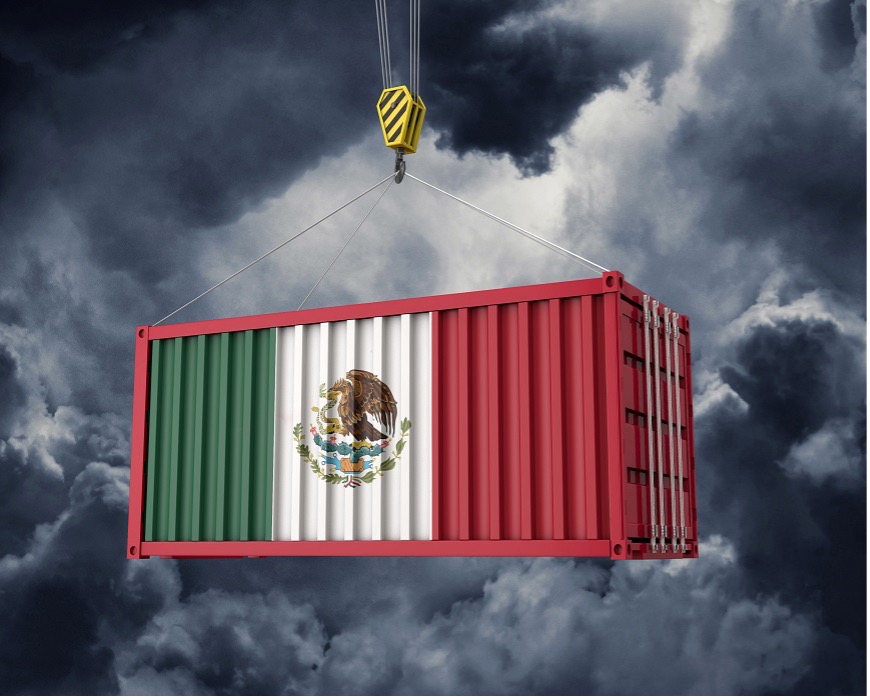
The United States has a long history of using tariffs. The first significant tariff legislation was the Tariff Act of 1789, signed by President George Washington. Tariffs have been used for various purposes over the years, including protecting domestic industries, generating government revenue, and negotiating trade agreements. The use of tariffs however has evolved, with significant changes during different historical periods, such as the high tariffs of the 19th century and the shift towards free trade in the mid-20th century, as well as the current U.S. trade war with China, and possibly soon to be with Mexico and Canada.

Read More »
space

Out of This World!  Proposed New Regulations on Space and Spacecraft

On October 23, 2024, the Directorate of Defense Trade Controls published proposed changes to the International Traffic in Arms Regulations (ITAR) affecting exports of spacecraft and launch vehicles and related activities. Subsequently the department extended the comment period from Nov. 22 to Dec. 23, 2024. The Bureau of Industry & Security (BIS) of the Department of Commerce published corresponding proposed changes to the Export Administration Regulations on Oct. 23, 2024.

Read More »
tariffs

Presidential Authority to Unilaterally Raise Tariffs

This article examines the constitutional authorities and various statutes that reserve tariff authorities for Congress and some legal authorities in which Congress has delegated tariff authorities to the President. The U.S. is a party to numerous multilateral and regional trade agreements that have binding tariff commitments that will be impacted as well.

Read More »
tariffs

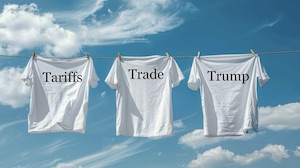
Tariffs, Trade & Trump

Historically, trade agreements have focused on reducing barriers to trade—such as tariffs and quotas—while encouraging economic integration and growth. Environmental protection was often considered a separate issue, addressed primarily through national regulations or multilateral environmental agreements like the Paris Agreement. However, recent developments suggest that trade and environmental concerns are converging, with many new trade agreements incorporating specific environmental provisions.

Read More »
buy America

OMB Issues Final Rule for Infrastructure Buy America Preferences

The Office of Management and Budget (“OMB”), Made in America Office issued a Final Rule to clarify the Build America, Buy America Act (“BABA”) provisions of the Infrastructure Investment and Jobs Act4 (“IIJA”) and to clarify existing provisions related to domestic preferences. The Final Rule amends Title 2 of the Code of Federal Regulations (“CFR”), subtitle A, chapter I by adding a new Part 184 to support implementation of BABA. OMB also amended 2 CFR 200.322 to clarify existing provisions within part 200. According to OMB, the Final Rule “is intended to improve consistency in the implementation of BABA requirements across the Federal Government.”5 The Final Rule will take effect October 23, 2023.

Read More »
Taiwan

The Domino Effect: What Would an Invasion of Taiwan Mean for Global Trade

Tensions are escalating in the South China Sea, a vital maritime route for international trade. Taiwan remains at the center of this conflict and in an increasingly interconnected world, the prospect of a Taiwan invasion has far-reaching implications for global trade and geopolitics. It’s becoming even more crucial to understand the potential repercussions of such an event on the global economy as a potential invasion from China becomes increasingly more likely.

Read More »
Compliance Consultants

International Trade Compliance Consultants and The Value Proposition

Maximizing value is crucial when companies contemplate bringing on external support for any organizational function. While a company may consider several value categories, this article explores five primary categories – productivity, profitability, image, experience, and convenience. By maintaining a value proposition mindset when requesting consultant resources, selecting consultants, and working with consultants, trade compliance professionals leverage the benefits of external experts.

Read More »
Compliance Training

Employee Education in Compliance Training

Employee education supports organizational growth and development. Its benefits are generally well known, but how do you ensure that training, in any form, generates the outcomes and advances you desire? Measuring and benchmarking success can be especially difficult when creating customized training programs, which are often needed for international trade compliance topics.

Read More »
Customs Regulations

Customs Brokers: Giving Credit to Accreditors

U.S. Customs & Border Protection (CBP) published the Final Rule on continuing education for individual customs broker license holders in the Federal Register on June 23, 2023. This Final Rule made several changes to Part 111 of the Customs Regulations and imposed a continuing education requirement on individual license holders.

Read More »