
From Awareness to Action: A Deep Dive into CTPAT Training
By: Judy Davis, Senior Trade Advisor, Braumiller Consulting Group In the global trade universe, where time holds huge importance, weak security practices in your international

By: Judy Davis, Senior Trade Advisor, Braumiller Consulting Group In the global trade universe, where time holds huge importance, weak security practices in your international

Several tribunals and courts were established at various periods of America’s history to resolve trade-related litigation, both at the trial and appellate levels, and even the Supreme Court has played a significant role in these disputes. The jurisdiction and structure of these courts evolved as the complexities and volume of trade disputes grew.

On September 15th, 2024, the Mexican Congress published on the Diario Oficial de la Federacion (Mexican Official Gazette) a decree to amend, add, and abolish several provisions of the Mexican Constitution regarding the Judicial Power. This reform, as it is being called, is one of the major changes to the Mexican Judicial System and has been met with heated debates by opponents who fear it will put the balance and separation of power at risk as it will result in a weakened and deteriorated judicial system overpassed by the legislative and executive powers.

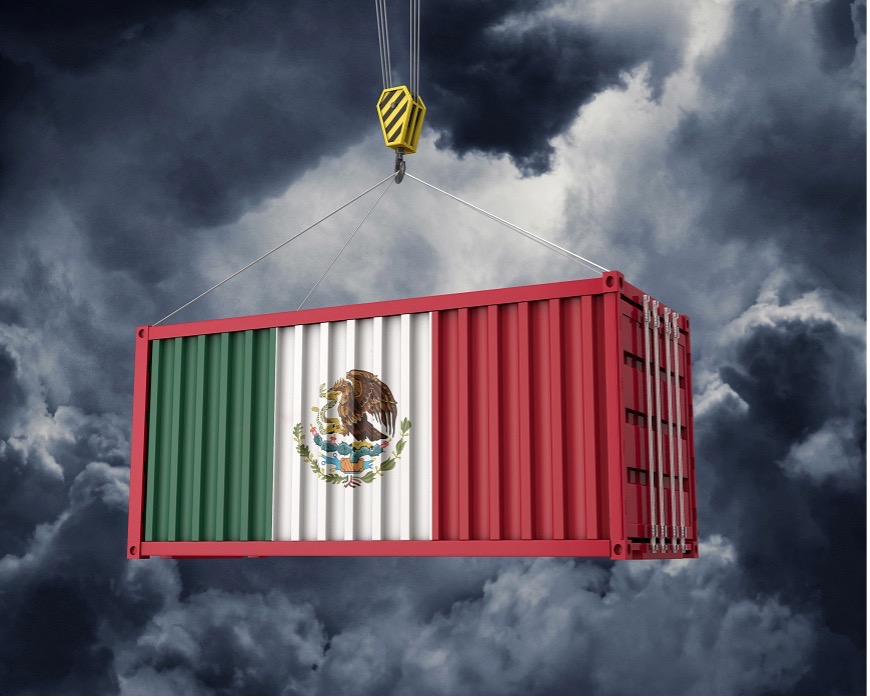
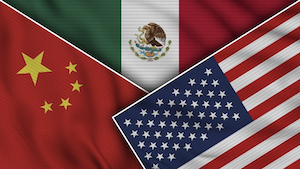
This is the second of a three-part series about the USMCA joint review process, focusing on China, Mexico, and competing visions of a “worker-centered” trade policy. Part one introduces the USMCA joint review process and explores how US trade policy would likely operate during Trump’s second term. Part two outlines some of the major trade issues that will be on the table during joint review, focusing on the Mexico-US relationship, and anticipates Harris’s likely approach to trade policy.

At a glance, gauging where we stand in our relationship with China overall, one would assume the key operative word in most descriptions would be “dismal” at best. This is of course accurate to a certain extent but looking at trade and commerce between the two countries, let’s take a look at the largest retailer in the U.S. as Walmart gives us a prime example of where we stand regarding unity as nations.

On September 15th, 2024, the Mexican Congress published on the Diario Oficial de la Federacion (Mexican Official Gazette) a decree to amend, add, and abolish several provisions of the Mexican Constitution regarding the Judicial Power. This reform, as it is being called, is one of the major changes to the Mexican Judicial System and has been met with heated debates by opponents who fear it will put the balance and separation of power at risk as it will result in a weakened and deteriorated judicial system overpassed by the legislative and executive powers.

Not only are shipments under $800 exempt from duty but they are also exempt from Section 301 duties on Chinese products, Consumer Product Safety Commission requirements, import quotas and other requirements. Although they are supposed to be subject to Antidumping and Countervailing duty and Food & Drug Administration requirements, many low value shipments pass through the system without meeting these requirements.

Decentralized Autonomous Organizations (DAOs) are a novel form of governance for blockchain-based protocols. Unlike traditional companies or non-profits, DAOs are member-controlled organizations that operate without a central authority or hierarchical management. Instead, DAOS use smart contracts, often on the Ethereum blockchain. DAOs often use governance tokens to enable members to vote on proposals, make collective decisions about the organization’s operations, treasury, and future development.

The union and management teams reached a settlement agreement that was announced on October 4, 2024 to end the port strike. The settlement does not resolve the issues, but extends the master contract to Jan. 15, 2025, to allow the sides to negotiate outstanding issues. A final agreement must be ratified by union members.

On September 27, 2024, Commerce announced its affirmative final determination in the ongoing AD / CVD aluminum extrusions investigation. On the same day Commerce also posted its Final Scope Issues and Decision Memorandum. In both, Commerce almost uniformly deferred to Petitioners in dismissing numerous comments of interested parties primarily challenging the scope of the investigation on a wide range of legal theories and practical considerations.

The intricate interplay between trade and food security has emerged as a vital global issue, one that is closely interwoven with the tapestry of international conflicts and political instability. Remember the 2019 pandemic when toilet paper supply chains were interrupted? Now imagine that on a much larger scale with basic food staples like rice, wheat or corn.

In the ever-changing world of trade, where predicting the future is a constant challenge, looking back at the past decade offers valuable insights into the evolution of the supply chain and the tools that have developed to contribute to efficiency and security.

On January 16, 2024, the Bureau of Industry and Security (BIS) under Assistant Secretary for Export Enforcement, Matthew Axelrod, disclosed significant enhancements to the process for Voluntary Self-Disclosures (VSDs) related to the Export Administration Regulations (EAR). These adjustments are strategically designed to streamline export control compliance for U.S. governmental bodies, the commercial sector, and academic entities.

Uno de los requisitos más importantes para importar mercancías a México es estar registrado como importador en el registro de importadores mexicanos. Hay 2 tipos de registros para importadores, uno es para importadores generales (Padrón de Importadores) y el otro es para importadores de sectores industriales específicos (Padrón de Importadores de Sectores Específicos) que pueden importar mercancías identificadas por el código arancelario MX (es decir, productos químicos, armas de fuego, puros, calzado, textiles, alcohol, hidrocarburos, siderurgia, automoción, etc.). Generalmente, estos 2 registros son listados con información de personas y entidades autorizadas para importar mercancías a México.

By: Gavin Andersen, Law Clerk, LCB and Adrienne Braumiller, Founding Partner, Braumiller Law Group Last June (2023), in response to a ruling request from Your Special

At the core of the definition, a Parallel import is a non-counterfeit product imported from another country without the permission of the intellectual property owner. They are also goods that are not authorized for importation into the U.S. It’s a global phenomenon, a very grey area, and their presence varies across different parts of the globe.

One of the most important requirements for importing goods into Mexico is to be registered as an importer under the Mexican importer’s registry. There are 2 types of registries for importers, one is for general importers (Padron de Importadores), and the other is for importers of specific industry sectors (Padron the Importadores de Sectores Especificos) which may import goods identified by the MX tariff code (i.e. chemical products, firearms, cigars, footwear, textiles, alcohol, hydrocarbons, steel, automotive, etc.). Generally, these 2 registries are lists with information of individuals and entities authorized to bring goods into Mexico.

Consider this scenario: a client faced the challenge of deferring duty payments while managing a significant volume of imports destined for re-exportation from the U.S. Initially considering duty drawbacks, which proved unsuitable for their specific needs, we turned our attention to bonded warehouses and free trade zones. This scenario is not uncommon in the trade world and highlights a critical decision point for many businesses: choosing between a bonded warehouse and a Foreign Trade Zone (FTZ).

The First Sale Rule applies in circumstances such as the example above. A US company places an order with a middleman in the US. The middleman in turn subcontracts to a foreign supplier. The supplier then ships the product either to the middleman or to the original US company that placed the order, meaning either could be the importer of record. The entered value could be the amount on the original purchase order or the price paid by the middleman to the foreign supplier.

The world of cryptocurrencies on blockchains and the world of traditional assets in markets have often stood in stark contrast to one another since Bitcoin’s creation in 2008. The lack of a reliable bridge between these two worlds has limited the impact of cryptocurrencies on assets in the real-world outside of on-chain speculation and prevented adoption of the benefits that blockchain technologies can bring to real world processes.