News Articles

Coercion in International Trade

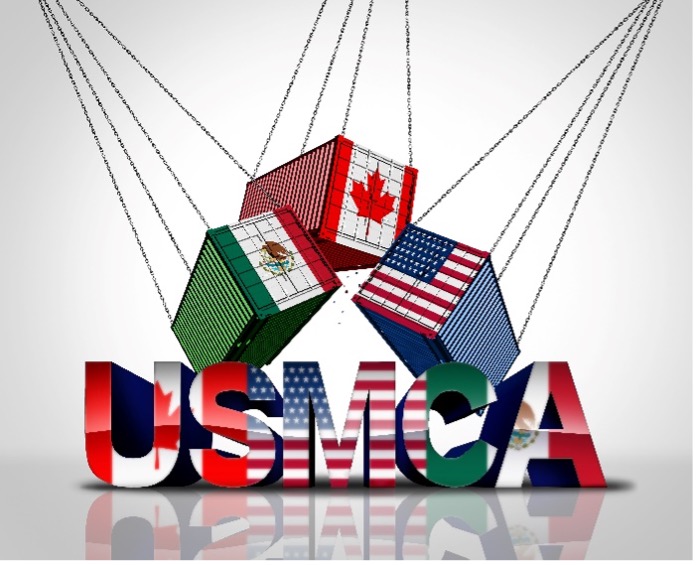
Is Coercion the Best Approach to North American Trade?

The Trump Administration has demonstrated a willingness to apply new tariffs to goods entering the U.S. as a viable tactic under its America First strategy to achieve greater fairness in its dealings with other countries. The application of tariffs is authorized under a number of standard legal procedures, such as trade remedy investigations to mitigate dumping of goods at less than fair value into the U.S. market or eliminating the unfair price advantages of government subsidies, and use of section 301 duties to respond to unfair trade practices by other countries. However, the broad-brush use of tariffs to coerce our trading partners to make concessions in non-trade areas to resolve a domestic crisis is relatively new.

Read More »
madman theory

Trade War and the Madman Theory: A Personal Reflection

I can’t help but reflect on a negotiation seminar I took in law school, where we studied the Madman Theory, popularized by Richard Nixon. The theory suggests that acting unpredictably or being willing to take extreme actions can create leverage. If your opponent believes you might “blow it all up,” they may feel forced to make concessions. This strategy clearly echoes Trump’s approach to trade policy.

Read More »
external revenue service

The External Revenue Service: A Bureaucratic Overreach or Necessary Reform?

President Donald Trump made headlines when he announced an External Revenue Service (ERS) agency to collect tariff incomes. The announcement sparked a heated debate among trade experts, economists, and business leaders. But, what exactly would be the purpose of the agency? Well, we can take the words spoken from his inauguration address as an answer.

Read More »
china's growing influence in latin america

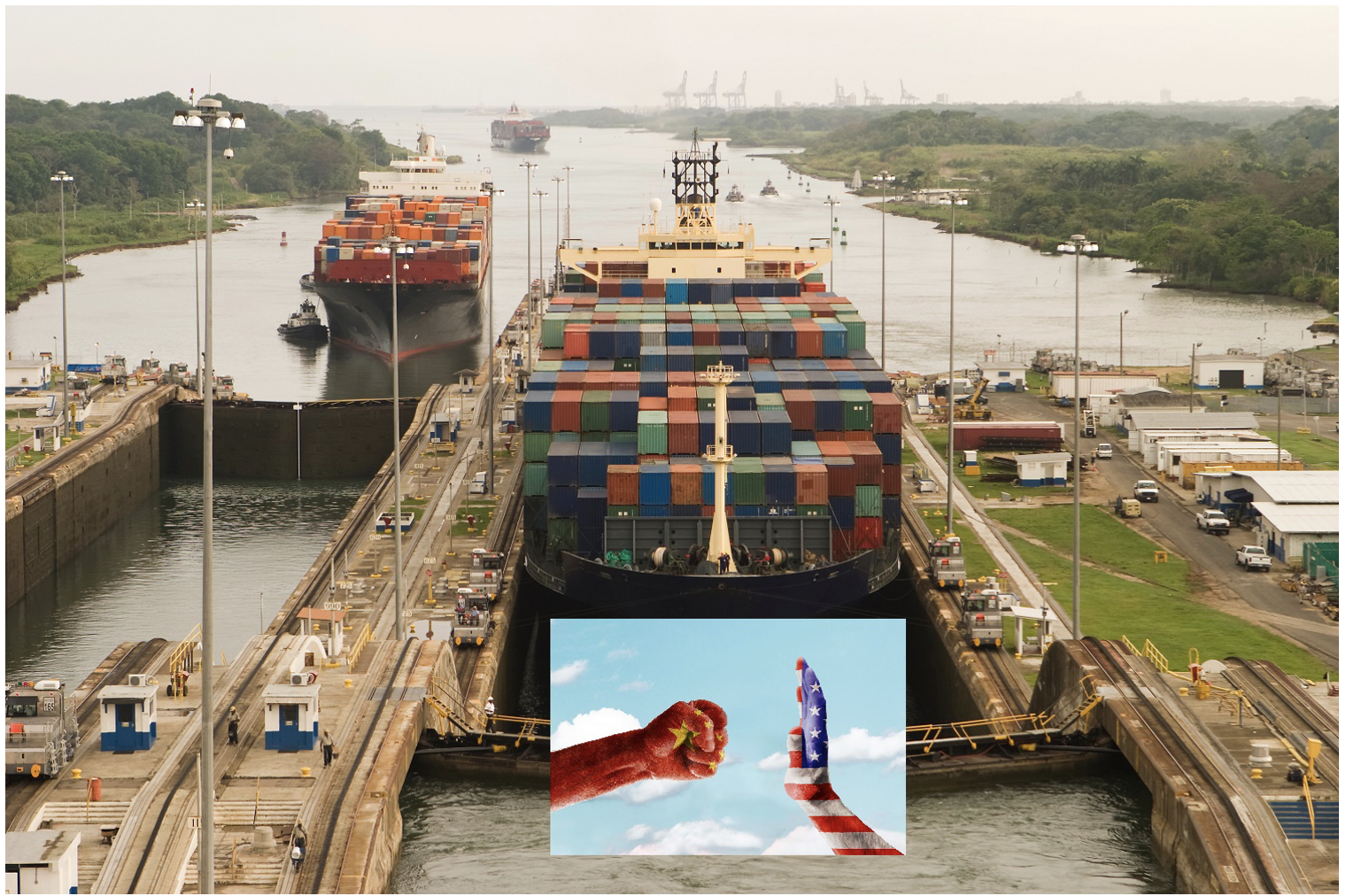
China’s Growing Influence in Latin America: Infrastructure Investments and Implications for the Panama Canal

China has significantly expanded its economic and geopolitical footprint in Latin America, particularly through the acquisition and development of critical infrastructure such as ports, airfields, and railways. This strategic move has raised questions about the long-term implications for regional sovereignty, global trade routes, and the future of the Panama Canal, a linchpin of international maritime commerce.

Read More »
Chemical Classification

Chemical Classification, It Matters, Now More Than Ever-To Most

If you have a company that imports chemicals – whether they are used as raw materials or components for onward manufacturing, or finished goods containing chemical components – you have been facing significant challenges over the last half-dozen years. Some of these challenges include the trade wars with China (I’m looking at you, Section 301) and the disruptive impact of COVID-19 to global supply chains. In response to these challenges, you have maybe modified your supply chain to reduce your dependence on Chinese chemical imports.  Or perhaps your supply chain was not largely affected by Section 301 tariffs (if so, consider yourself lucky – and may your luck hold!).

Read More »
Customs broker license exam

The U.S. Customs Broker License Exam: Tips and Perspectives

A customs broker license is issued to a person who has successfully passed a grueling licensing exam (after paying the exam fee), submitted a license application (along with another fee), and passed the subsequent FBI background investigation. The open-book exam, which lasts 4½ hours and comprises 80 multiple-choice questions, is ostensibly intended to measure one’s knowledge about various customs-related regulations and practices yet experience or employment in a customs-related job is not a prerequisite.

Read More »
Harmonized Tax Schedule

Punctuation in the Harmonized Tariff Schedule of the United States

Punctuation matters. I’ve always remembered a poster on the wall of a co-worker’s office—this was back in the 80s—that showed baby seals dancing at a disco under a four-word caption: STOP CLUBBING, BABY SEALS. The poster (which has become an internet meme forty years later) cleverly showed how something as seemingly minor as a comma can change the meaning of a phrase or sentence. If a comma can flip the meaning of a four-word sentence, is it hard to imagine the effect that punctuation, or lack of punctuation, might have on our interpretation of a law or regulation?

Read More »
tariffs

Beyond the Tariff: Proactive Strategies to Mitigate Trade Remedy Impacts

In today’s complex global marketplace, businesses are increasingly confronted with the challenges of supply chain disruptions, rising costs, and fierce competition—all exacerbated by trade remedy tariffs. While many of these tariffs are already in play, President-elect Trump has promised to impose new tariffs and increase old ones.

Read More »
Mercosur

Mercosur-EU – A New Potential Powerhouse in Trade Blocs if Ratified

After 25 years of negotiations, the European Union and the Southern Common Market, commonly known as Mercosur, comprised of Brazil, Argentina, Uruguay, and Paraguay, signed a free trade agreement. I think this, among many more regional deals to come was suddenly expedited due to the anticipated land mines with the upcoming Trump 2.0 administration and trade policy regarding tariffs for all.

Read More »
tariffs

Tariffs, and the Temptation to Use Them as Geopolitical Leverage

The United States has a long history of using tariffs. The first significant tariff legislation was the Tariff Act of 1789, signed by President George Washington. Tariffs have been used for various purposes over the years, including protecting domestic industries, generating government revenue, and negotiating trade agreements. The use of tariffs however has evolved, with significant changes during different historical periods, such as the high tariffs of the 19th century and the shift towards free trade in the mid-20th century, as well as the current U.S. trade war with China, and possibly soon to be with Mexico and Canada.

Read More »
prior notice regulations

Any Comments on FDA’s New Proposed Rule on Prior Notice Regulations?

On November 1, 2023, FDA issued a proposed rule that would make changes to its prior notice regulations, if the rule is finalized. These changes include requiring the name of the mail service and a mail tracking number to be provided in prior notice for food articles arriving by international mail. In addition, the FDA proposes that food facility registration information and prior notice be submitted within a specific timeframe after receiving certain notices of refusal or hold (“post-refusal” and “post-hold” submissions).

Read More »
antidumping

New Antidumping and Countervailing Duty Investigation Initiated Covering Aluminum Extrusions from 15 Countries

On October 4, 2023, A coalition of 14 U.S. aluminum extrusion producers and labor unions filed petitions before the Department of Commerce, International Trade Administration (Commerce) and the International Trade Commission (ITC) seeking to impose antidumping (AD) and countervailing duties (CVD) on aluminum extrusions produced in 15 countries and exported to the U.S.

Read More »
Legal Framework

Legal Framework Governing IMMEX Operations

As we have previously explained in other articles, an IMMEX is a duty deferral program from the Mexican federal government created in 2006, which stands for Industria Manufacturera, Maquiladora y de Servicios de Exportación (Manufacturing, Maquiladora and Export Services Industry).

Read More »
BIS

Overview of BIS’s Interim Final Rules, Export Controls for Advanced Computing, Supercomputing, and Artificial Intelligence

On October 25, 2023, the Bureau of Industry and Security (“BIS”) published interim final rules amending the Export Administration Regulations (“EAR”) to add/clarify new controls on semiconductor manufacturing equipment (“SME”), advanced computing integrated circuits (“IC”), and computer commodities containing them.

Read More »
Xinjiang Exclusions

Challenges Ahead! – Requesting to be Excluded From the Xinjiang Exclusions

In April of this year U.S. Customs & Border Protection (CBP) issued Headquarters Ruling H330077. The ruling was in response to a protest filed by an importer that had a shipment of wearing apparel excluded from entry under a Withhold Release Order (WRO) at the port of Newark, NJ. The wearing apparel was processed from cotton produced in India, made into yarn and fabric in China, and converted to wearing apparel in Cambodia. None of the parties to the transaction were located in the Xinjiang Region of China.

Read More »
buy America

OMB Issues Final Rule for Infrastructure Buy America Preferences

The Office of Management and Budget (“OMB”), Made in America Office issued a Final Rule to clarify the Build America, Buy America Act (“BABA”) provisions of the Infrastructure Investment and Jobs Act4 (“IIJA”) and to clarify existing provisions related to domestic preferences. The Final Rule amends Title 2 of the Code of Federal Regulations (“CFR”), subtitle A, chapter I by adding a new Part 184 to support implementation of BABA. OMB also amended 2 CFR 200.322 to clarify existing provisions within part 200. According to OMB, the Final Rule “is intended to improve consistency in the implementation of BABA requirements across the Federal Government.”5 The Final Rule will take effect October 23, 2023.

Read More »
Taiwan

The Domino Effect: What Would an Invasion of Taiwan Mean for Global Trade

Tensions are escalating in the South China Sea, a vital maritime route for international trade. Taiwan remains at the center of this conflict and in an increasingly interconnected world, the prospect of a Taiwan invasion has far-reaching implications for global trade and geopolitics. It’s becoming even more crucial to understand the potential repercussions of such an event on the global economy as a potential invasion from China becomes increasingly more likely.

Read More »
Compliance Consultants

International Trade Compliance Consultants and The Value Proposition

Maximizing value is crucial when companies contemplate bringing on external support for any organizational function. While a company may consider several value categories, this article explores five primary categories – productivity, profitability, image, experience, and convenience. By maintaining a value proposition mindset when requesting consultant resources, selecting consultants, and working with consultants, trade compliance professionals leverage the benefits of external experts.

Read More »
Compliance Training

Employee Education in Compliance Training

Employee education supports organizational growth and development. Its benefits are generally well known, but how do you ensure that training, in any form, generates the outcomes and advances you desire? Measuring and benchmarking success can be especially difficult when creating customized training programs, which are often needed for international trade compliance topics.

Read More »