
Hot Topics in International Trade: Web 3.0, digital assets, DAO’s, blockchain
What is in store for Web 3.0, digital assets, DAOs, blockchain, and others. James Holbein discusses a future where these tools will be simple, fast and easy to use.

What is in store for Web 3.0, digital assets, DAOs, blockchain, and others. James Holbein discusses a future where these tools will be simple, fast and easy to use.

James Holbein discusses the future of regulation and oversight of crypto currency, including from the U.S. Congress, the Fed, SEC, the U.S. Treasury Department, and other agencies.

James Holbein discusses FTX and the emerging crypto currency industry. He includes the importance of transparency offered by blockchain, something that FTX masked.

This article discusses compliance “Buy America” provisions in federal procurement laws and how the Federal Acquisition Regulations (FAR) implement some of those commitments in government contracts.

This article provides an overview of federal procurement laws and how the Federal Acquisition Regulations (FAR) implement some of those commitments in government contracts. The FAR, found under 48 C.F.R. Part 25, comprises the list of rules governing procurement of products and materials by federal agencies for public use.

Regenerative Finance (ReFi) is a growing Web3 field that offers an opportunity to rethink how we approach finance, investing, and sustainable economic development. ReFi takes a holistic approach to finance and development, considering the environmental, social, and economic impacts of financial decisions, and aims to create a regenerative economic ecosystem rather than following a primarily extractive approach.
INTRODUCTION This article will review the options the White House has outlined for regulation and oversight of the digital assets sector, based upon a set
In response to the Executive Order on Ensuring Responsible Development of Digital Assets[1] issued on March 9, 2022, both the White House Office of Science and Technology Policy (OSTP) and the Treasury Department (Treasury) have recently issued reports analyzing the possible design and feasibility of creating a U.S. Central Bank Digital Currency (CBDC).[2] The reports make clear that significant technical issues and major policy considerations need to be addressed for the U.S. to develop a CBDC.

As Decentralized Autonomous Organizations (DAOs) have exploded into public consciousness, new types of DAOs are proliferating. A novel use case for DAOs, termed “ImpactDAOs”, are defined as “any DAO that creates net positive externalities to the ecosystem around it.” An ImpactDAO seeks to use web3 and crypto-economic principles to regenerate a system, increasing resources and sustainability over time.
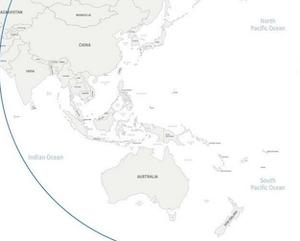
On May 23, 2022, President Biden launched the Indo-Pacific Economic Framework for Prosperity (IPEF) with a dozen initial partners: Australia, Brunei, India, Indonesia, Japan, Republic of Korea, Malaysia, New Zealand, the Philippines, Singapore, Thailand, and Vietnam.