
By Victoria Holmes, Braumiller Law Group
On March 9th, 2026, maritime tracking data showed just one outbound vessel, bearing an Iranian flag, transiting the Strait of Hormuz, with no inbound movements recorded at all. This lone vessel signifies a global conflict in a very important region around global trade. For all practical purposes, which include not wanting to get blown to smithereens, Western-linked commercial shipping has withdrawn entirely from this area of the Persian Gulf, the latest and most consequential fallout from a rapidly escalating military confrontation involving the United States, Israel, and Iran.
The crisis was triggered on February 28th, 2026, when President Donald Trump announced on Truth Social the death of Iran’s Supreme Leader, Ayatollah Ali Khamenei, who was killed in a joint U.S.-Israeli military bombardment. Trump framed the operation as justice delivered to Khamenei and those slain by what he called his “gang of bloodthirsty thugs.” The announcement had an immediate impact through commodity markets worldwide.
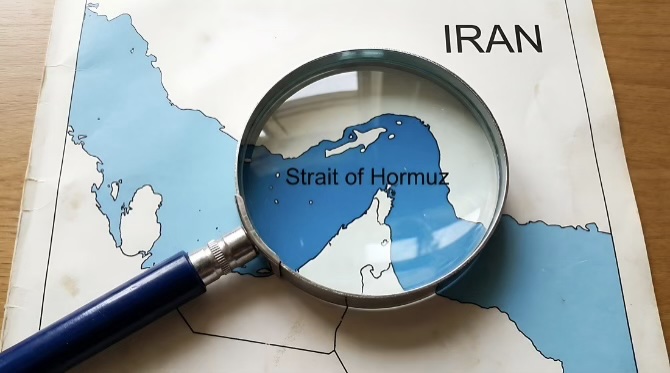
Six days later, on March 4th, Iran’s Islamic Revolutionary Guard Corps (IRGC) formally closed the Strait of Hormuz to commercial traffic, issuing warnings against any vessels attempting passage. The strait, which forms the narrow maritime corridor between Iran and Oman, is the single most important chokepoint in global energy trade. Tanker traffic, which initially plunged roughly 70 percentin the days following the strikes, has since fallen to zero. The Trump administration has hinted at potential U.S. military escorts to restore safe passage through the waterway, but no formal policy has been announced.
An Energy Crisis in the Making
The economic stakes could hardly be higher. According to energy intelligence firm Kpler, approximately 13 million barrels of oil passed through the Strait each day in 2025, roughly 31 percent of all seaborne crude oil globally. The closure has already pushed oil prices sharply higher, with analysts warning that a prolonged blockade could drive Brent crude above $100 per barrel.
Natural gas markets face an equally severe disruption. Qatar, one of the world’s leading exporters of liquified natural gas (LNG), halted production after Iranian drone strikes struck key facilities in its industrial zones. The impact on South Asia has been immediate and severe: Pakistan, Bangladesh, and India are all heavily reliant on LNG imports from Qatar and the United Arab Emirates, with very limited strategic reserves to buffer the shortfall. China, while significantly exposed, roughly 40 percent of its oil imports transit Hormuz, has somewhat more cushion thanks to its stockpile reserves.
Beyond Oil: Broader Commodity and Supply Chain Fallout
The disruption extends well beyond oil and gas. Raw materials critical to agricultural fertilizer production, aluminum smelting, and steel manufacturing are all seeing supply contractions as shipping lanes go dark. Dry bulk carriers, the vessels that move iron ore, grain, and industrial minerals, have seen transits collapse alongside tanker traffic. Analysts estimate the disruption puts roughly 18 percent of global iron ore pellet exports and close to 10 percent of primary aluminum production at risk.
Major international shipping carriers have suspended operations through the strait and are rerouting vessels around the Cape of Good Hope at Africa’s southern tip. The detour adds weeks to transit times and significantly raises freight costs, a burden that will ultimately be passed to importers and consumers worldwide.
According to a report by the New York Times, a U.S. official suggested that closing the Strait completely would be difficult for Iran due to military constraints, but harassment, seizures and targeting of vessels are tactics Iran has used in the past. More recent reports have shown that Iran has planted mines throughout the Strait, causing more of a headache for the United States and global trade. President Trump has requested that other countries get involved with security in the strait for ship passage, but no country has formally stepped up with warships yet. Several have responded, but all with caution, hesitation, or nonmilitary signals. The clearest reporting shows no U.S. ally has committed naval forces to Trump’s request so far. President Trump has threatened retaliation for the no-shows relating to NATO.
The situation remains fluid. With tanker traffic at a standstill and no diplomatic resolution in sight, international trade organizations and energy markets are bracing for a prolonged period of volatility. How quickly and whether the strait reopens to commercial shipping will be among the defining economic questions of the coming weeks.