
By Bob Brewer, Braumiller Law Group
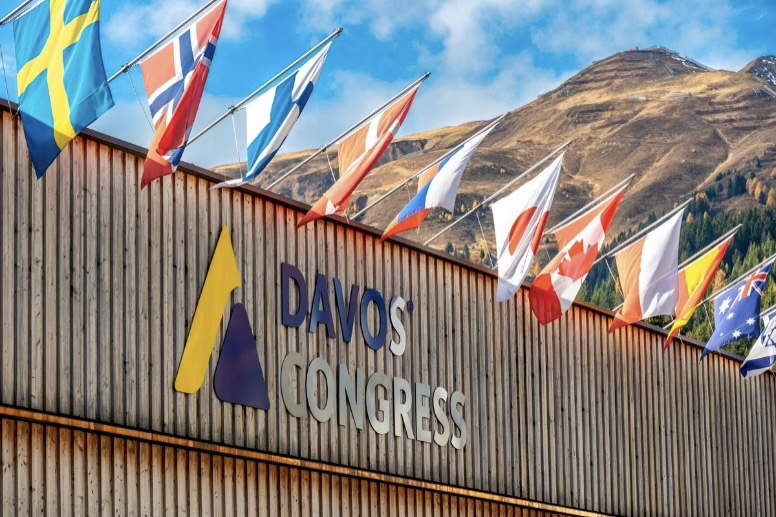
For whatever reason, if you missed the spectacle created by President Trump on the world stage recently in Davos, Switzerland at the World Economic Forum, you really need to pay close attention now to the fall out. Leading up to the conference the majority of the world was watching and waiting for the outcome of the U.S. threats to take Greenland by force, combined with the threat of tariffs to be placed on those 7 EU countries and Norway who did not succumb to the demands of the Trump administration to outright own the property, who classified the annexation as necessary for international security. Top business executives in global economies were watching and probably also wondering just who the hell was going to stand-up to the U.S. pressure campaign, and that’s where Canadian Prime Minister Mark Carney stepped up to the mic and delivered a speech that sent shockwaves across continents. The highlight of his delivery was that of middle-powers uniting against the bullies of the world. (No names mentioned) He spoke of the power that these countries could collectively represent on the global stage, and how the world of trade must be brought back to the rules of international law and order. He made it clear that this was the new way forward, as global trade was “in the midst of a rupture and not a transition.” He said that the rules-based order is fading. Meaning, position yourself on the global stage where no one country’s economic coercion could bring you to your knees. (California Governor Gavin Newsom was there handing out knee pads (really) to those who were choosing capitulation) Carney stated, “If you are not at the table, then you are on the menu.” So, the big question now is, will the Middle Power Countries (let’s capitalize it now and officially call them the MPC’s), heed Carney’s call and unite? Well, Australia immediately stepped up and invited Carney to a meeting of the minds in March, and from there, who knows who else may join the club. (The Middle Power Country Alliance….or MPCA). Canada and Mexico may both need to accelerate this new strategy in order to replace the USMCA which comes up for review in July of this year. There is a chance that this North American free trade agreement will not survive the review.
If we were to define those countries who would qualify as being part of the middle powers one could say that they aren’t superpowers or great powers but still exert meaningful regional or global influence through diplomacy, economic weight, or coalition‑building. Obviously, Canada qualifies as does Australia. South Korea, Japan, as well as some of the countries in the EU like, Germany, Italy, Spain, Netherlands, Sweden, and Denmark, in addition to Norway. Worth a mention to possibly joining the MPCA are Turkey, Indonesia, Mexico, Brazil, South Africa, Saudi Arabia, United Arab Emirates, Qatar, Egypt, and Nigeria. Of all the previous countries mentioned, post Davos U.S. campaign of terror, I would venture to say that only Saudi Arabia, United Arab Emirates, Qatar, and Argentina (winner of the $20 billion U.S. lottery) would favor the U.S. as a solid trading partner moving forward. A great deal of geopolitical damage has been done in Davos via the U.S., and although some of what was said against our allies may be temporarily forgiven for the sake of mutual trade, it will never be forgotten. (Especially the comment about our NATO allies, like Denmark not stepping up to the front line in the war with Afghanistan)
It’s not just talk, as Carney is putting Canadian money where his mouth is creating buzz around the globe with various trade agreements, one of which is with China. Within the Canada–China agreement Canada will now allow 49,000 Chinese electric vehicles into the market annually at a 6.1% tariff, reversing the 100% tariff imposed in 2024. China will also lower tariffs on Canadian canola to 15% by March 2026 and remove tariffs on Canadian lobsters, crabs, and peas until at least the end of 2026. This is Canada’s most consequential new trade arrangement since the CETA implementation (the $860 billion dollar rearmament of the EU) signaling a deliberate diversification away from U.S. dependence amid ongoing tariff tensions. President Trump has now threatened 100% tariffs on all Canadian goods entering the U.S. due to this China-Canada arrangement, stating that the U.S. will not allow Canada to act as China’s back door drop off port for Chinese goods. It’s too late, the tariff threats are now falling on deaf Canadian ears. Moving right along, recently announced on September 24, 2025, was Canada’s first-ever bilateral trade agreement with Indonesia. Often described as a Comprehensive Economic Partnership Agreement, which is strategic since Indonesia is a G20 economy and a rising middle power—this deal positions Canada more deeply in ASEAN supply chains. Also of note, the Canada–United Arab Emirates FIPA (November 2025) was signed during Prime Minister Mark Carney’s visit to Abu Dhabi. It’s a Foreign Investment Promotion and Protection Agreement (FIPA)—not a full trade agreement, but a binding investment treaty that leads to more robust trade. Its purpose is to protect Canadian investors in the UAE and provide dispute‑resolution mechanisms to encourage two‑way investment. This is part of Canada’s broader Gulf engagement strategy as the region becomes a global logistics and capital hub.
Obviously, at this juncture in the back and forth between President Trump and Mark Carney, Canada’s trade talks with the U.S. have been stalled. I do not see a way back for the U.S. with Canada until the next, totally new, administration is in the Whitehouse and is forthcoming in a willingness to reach an agreement regarding working together towards both country’s mutual benefit. This vacuum is one reason why Canada is accelerating deals elsewhere, creating the playbook for many middle-power countries to follow. Currently, even though exports from Canada to the U.S. have dropped from 75% to 67%, and falling, the total estimate of two-way trade for 2025 is $750 billion. Canadian-China trade two-way estimate for 2025 is roughly $120 billion, and Mexico comes in 3rd place at $56 billion. The remainder of Canada’s top seven trading partners is rounded out with Japan, Germany, UK and S. Korea allowing for an expansion activity as the groundwork has been in place for years. There is low-hanging fruit in the Indo-Pacific for Canada as it’s one of the fastest growing regions on the planet. This includes India and ASEAN, as well as Australia. Australia’s top three trading partners are the U.S., China and Japan, so China and Japan stand a good chance of gaining more in trade with Australia. Why? Because a major flashpoint has emerged when U.S. Defense Secretary Pete Hegseth publicly demanded that Australia raise defense spending to 3.5% of GDP “as soon as possible.” Australia flatly refused, and Prime Minister Anthony Albanese publicly rejected the demand. This has created tension inside the alliance. It’s worth mentioning that Mexico, who is already strengthening trade ties with Canada will be looking to expand into ASEAN and further into Latin America as Mexico continues to resist U.S. pressure to take on more responsibility for migrant flows, which fuels political tension in Washington. Quite frankly, President Trump would like to bomb the cartels, and obviously President Sheinbaum has responded with an emphatic “hell no you won’t.” In line with the MPC’s mandate Mexico maintains one of the largest FTA networks in the world, covering 50 countries. These agreements are already in force and shape Mexico’s long‑term trade strategy of diversification.
Contemporary geopolitical analysis emphasizes that middle power countries are increasingly important as U.S.–China rivalry intensifies, along with the U.S. continuing to create great divides with an abundance of allies around the globe. Countries like ASEAN members, Gulf states, and mid‑sized European economies are being pushed to adapt supply chains, hedge strategically, and form ad‑hoc coalitions. Given the unwavering direction of the current U.S. administration MPC’s will diversify to survive. The timing looks to be just right, as it appears that the majority of the world of trade has become exhausted with the never-ending market volatility and its creator. Just take a look at the countries who have paid the one billion dollars and joined President Trump’s Board of Peace as well as those who haven’t. As of 1/24/2026 some 35 countries have signed up to join the board, including regional Middle East powers such as Israel, Turkey, Egypt, Saudi Arabia and Qatar. Traditional U.S. allies, namely EU countries and Canada have been reluctant to commit to the initiative or its membership fee, among other obvious reasons. President Trump said he was withdrawing Canada’s invitation to join the group. In speaking with my Canadian colleagues, they couldn’t possibly care any less than they already do. They are officially “done” with the U.S. As a counter to President Trump’s statement that Canada lives because of the U.S. Carney said,” Canada does not live because of the United States, Canada thrives because we are Canadians.” I am going to be in London in March and will have to tell everyone that I am Canadian just so I don’t get into a fight.’